
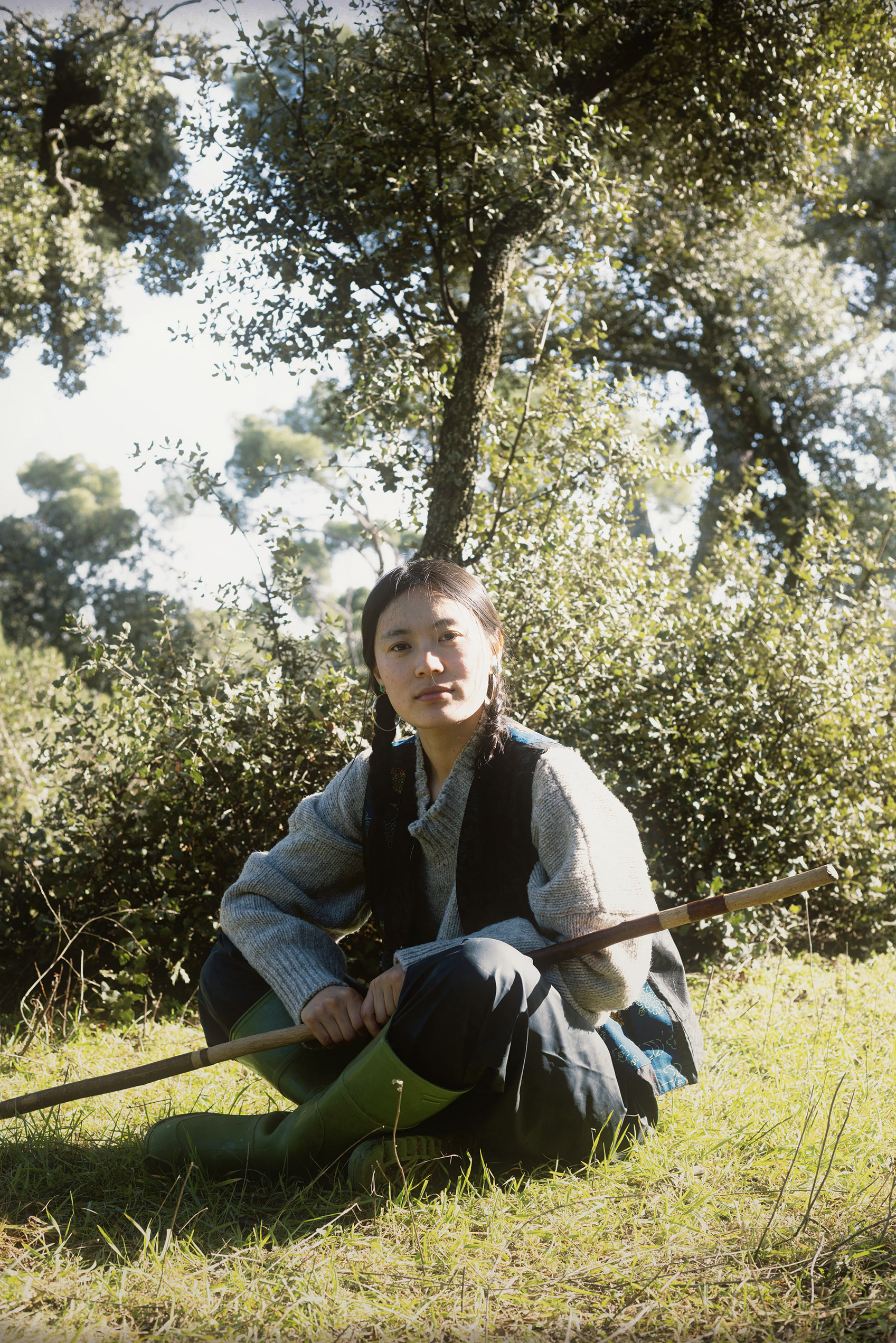
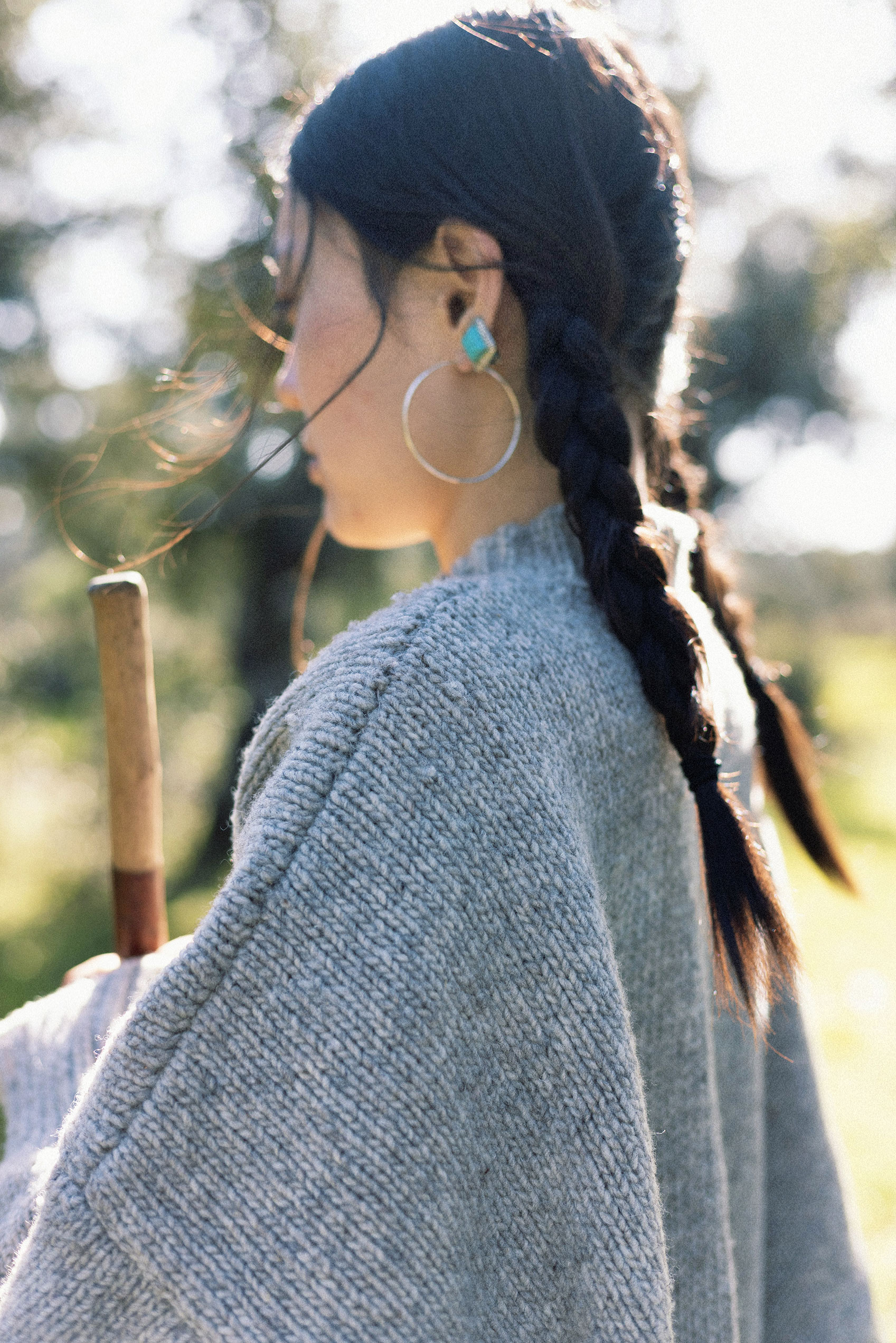
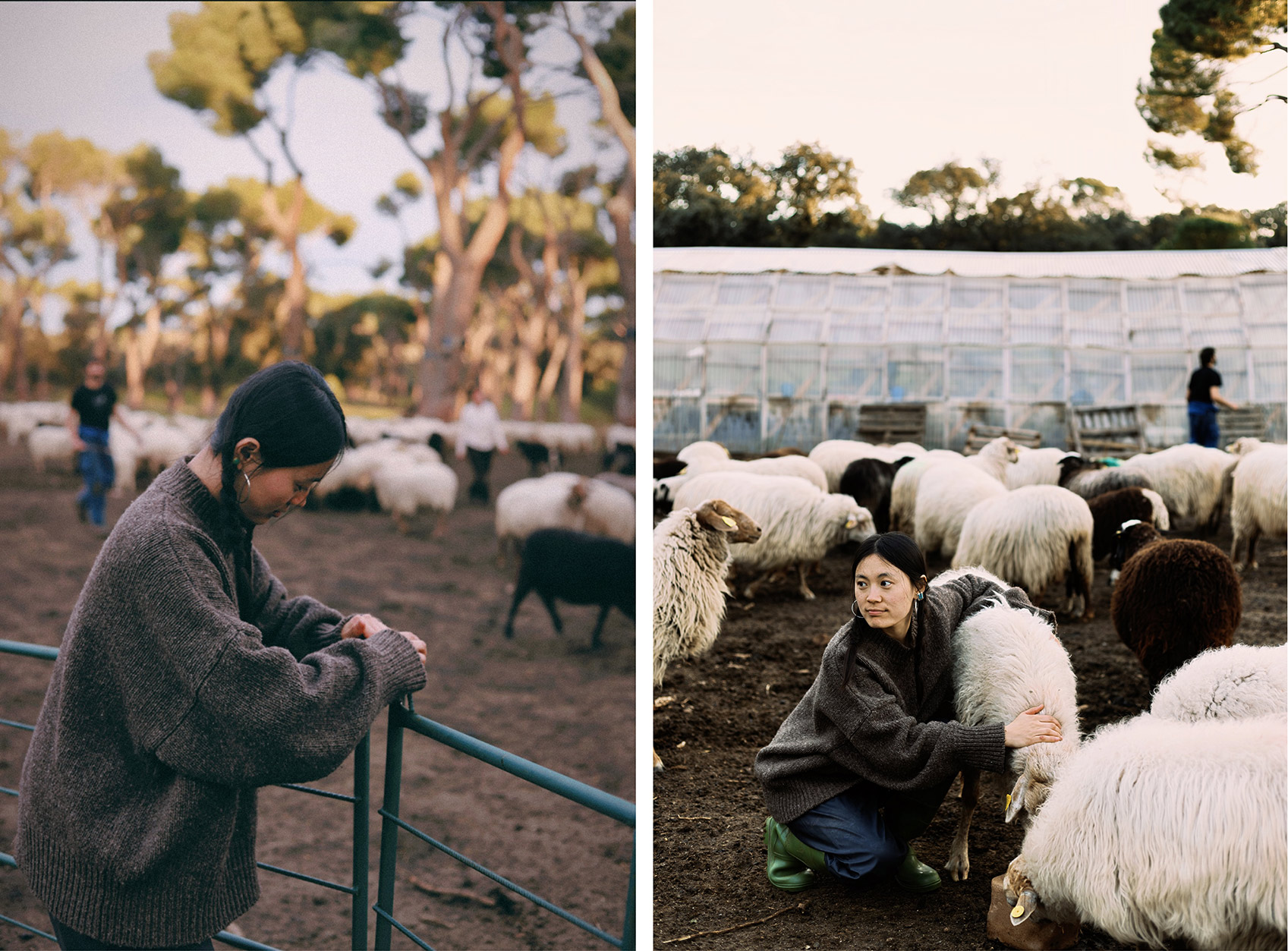

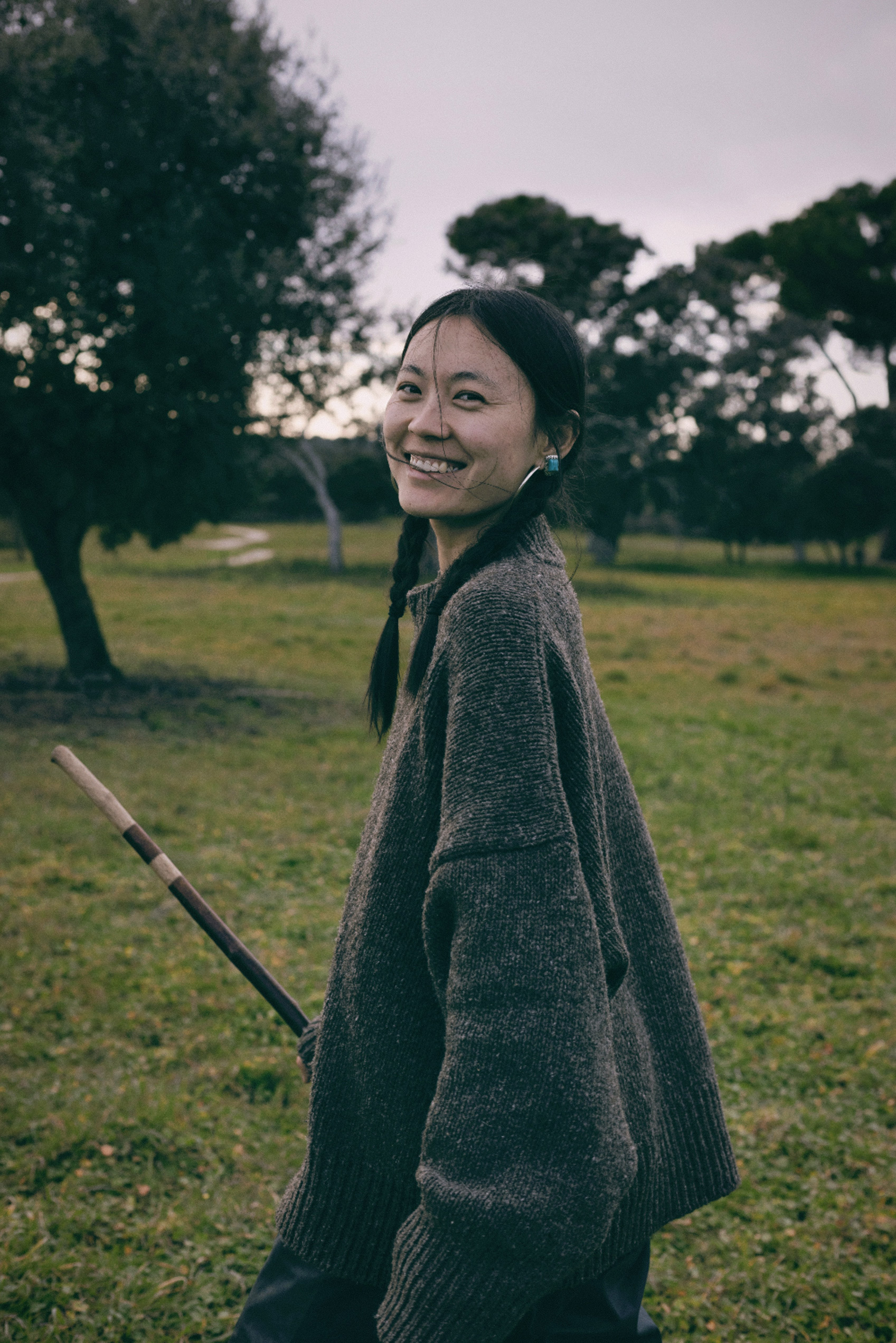
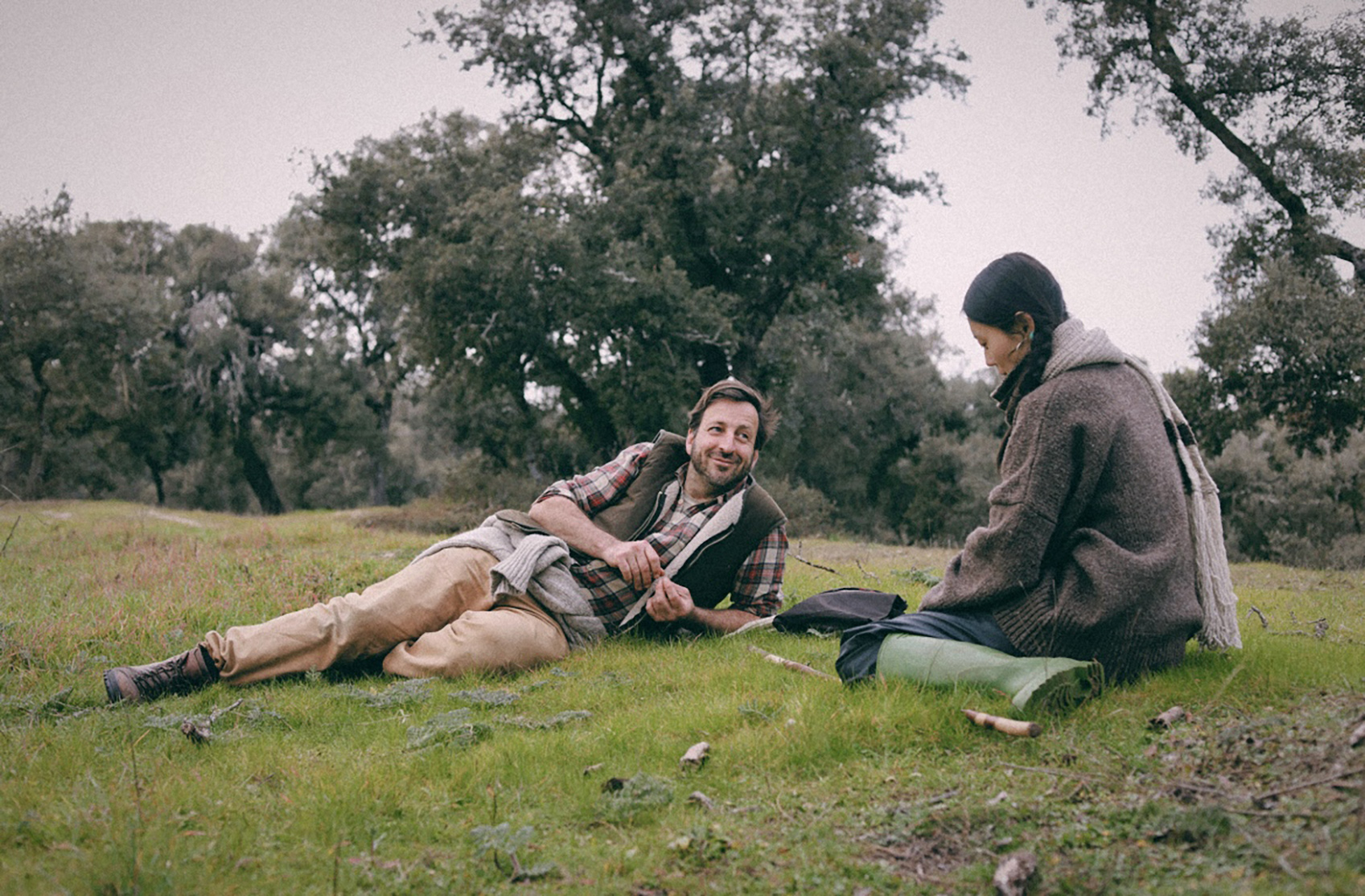
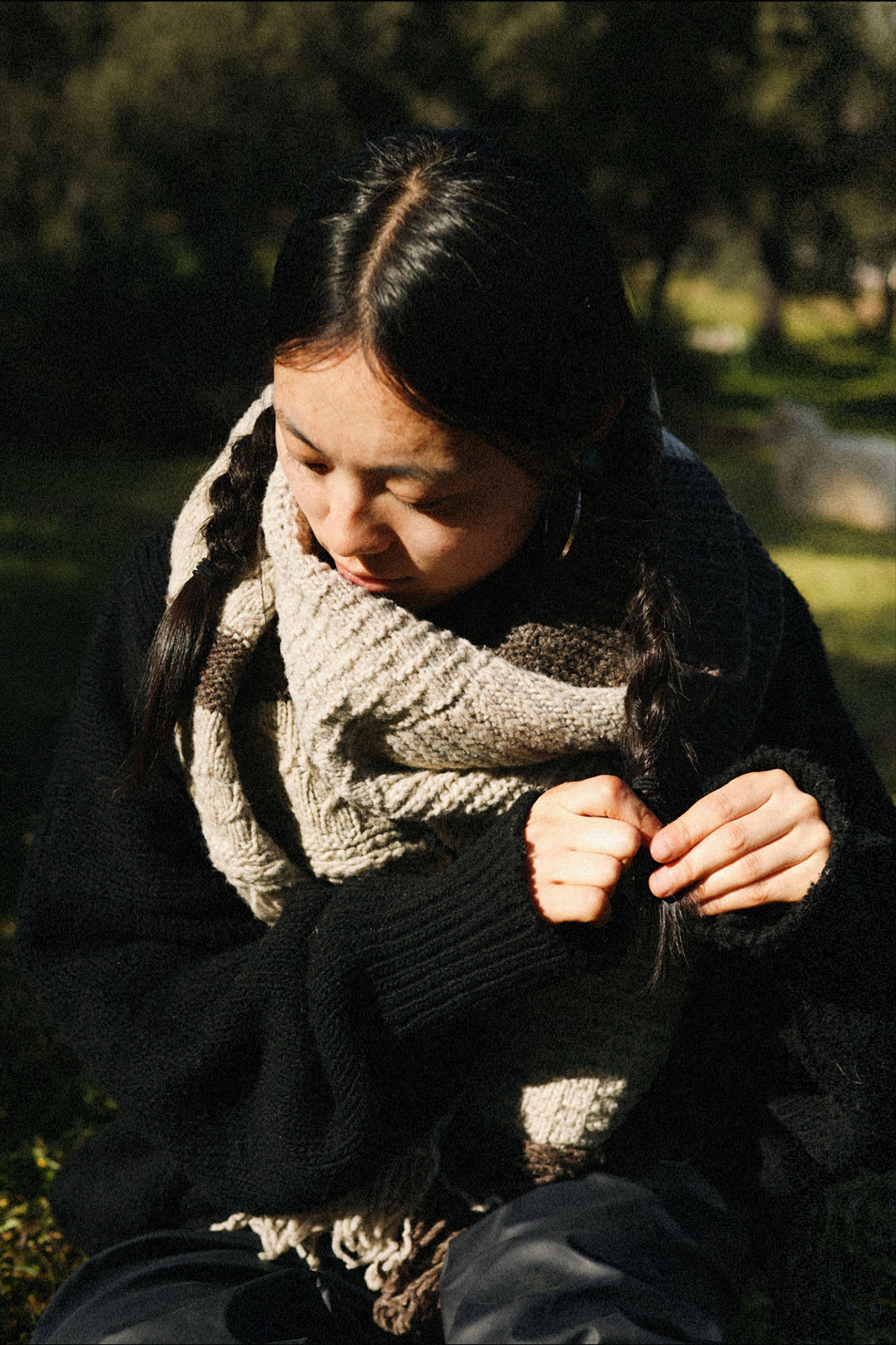
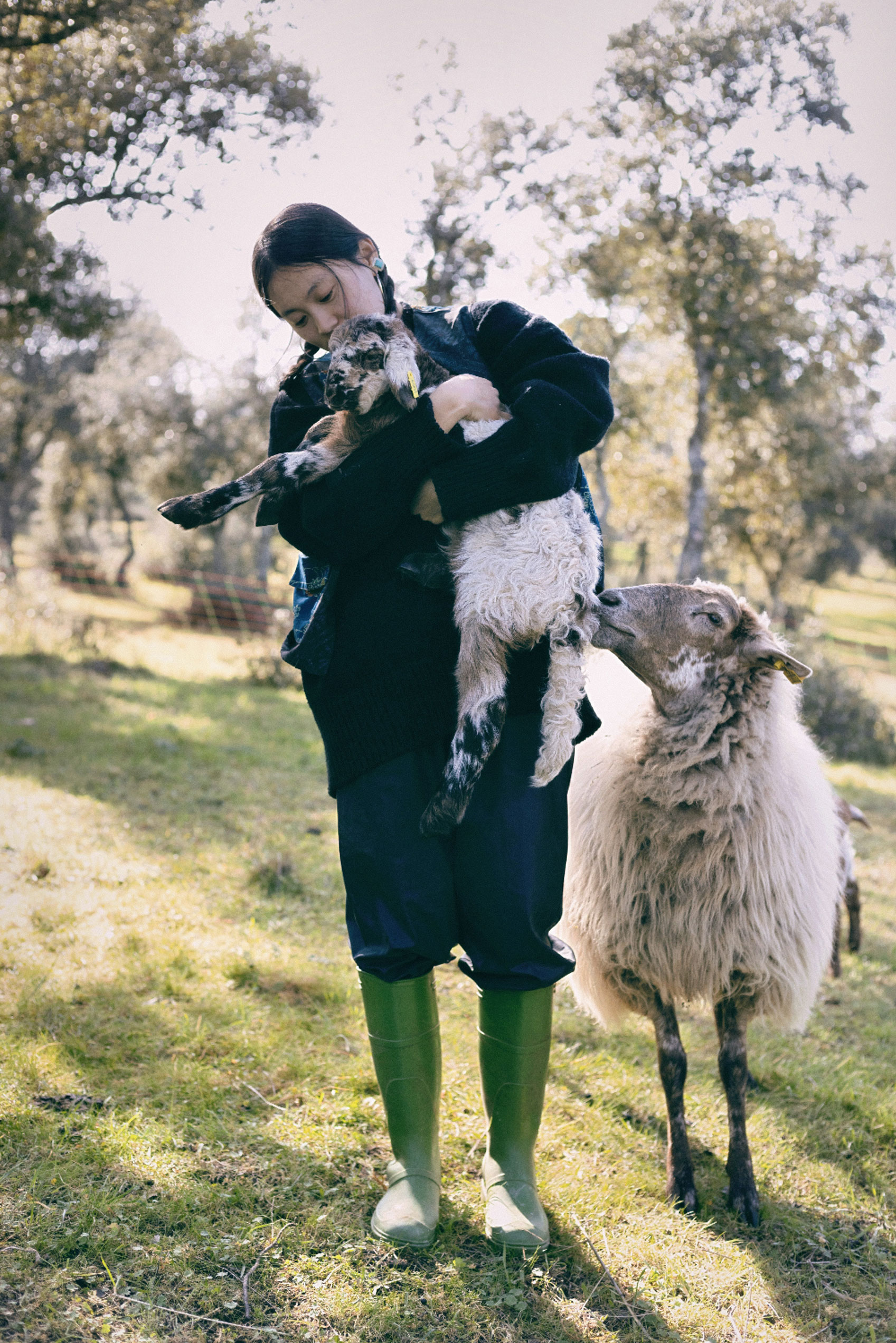
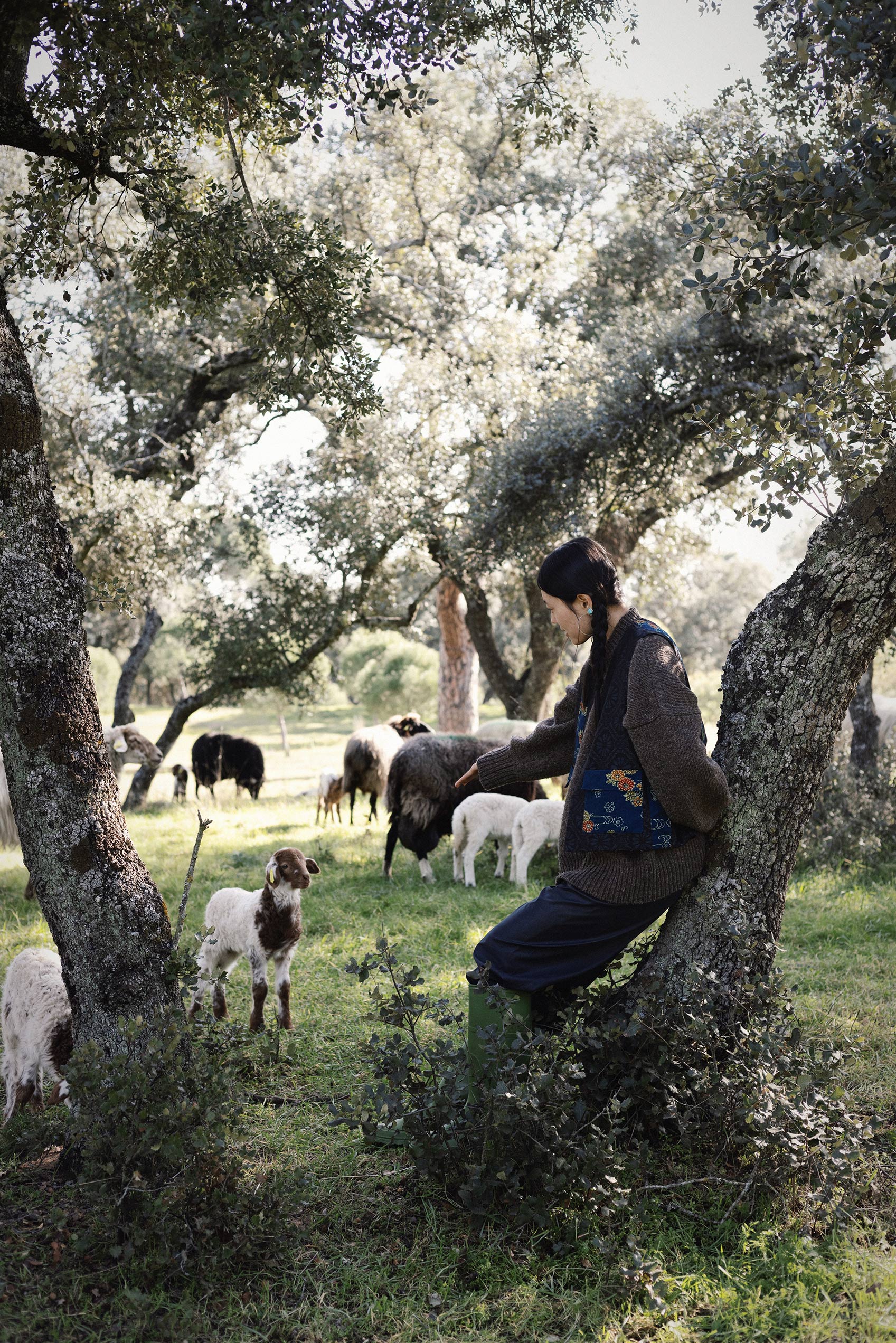
Thank you all for your interest in our Shepherds sale. This year is the Intenational year of Ragelands and Pastoralists. We had the opportunity to talk to beautiful Zaya Neluud in Madrid. She grew up in Mongolia and came to Spain as a volunteer shepherd for Inland. She has a lot to say about shepherding and we are so lucky to have her sharing her life journey and knowledge with us all. Enjoy.
Zaya, how did shepherding come to your life?
Born into a Mongolian herding family in Bayan Ondor village, Inner Mongolia, we nurtured our flock as it grew to 1,000 sheep, a responsibility shared between my family and my uncle. From a young age, I took part in every aspect of herding—milking, tending to injuries, making dairy products, shearing sheep, and caring for newborn lambs. Each day began with our flock setting off from the sheepfold at dawn, grazing across the boundless grasslands, and ended as we guided them home at dusk.
One of my greatest joys was making dairy products alongside my grandmother—pure, fresh creations that have become rare in the modern world. My father and uncle took turns herding, a tradition that continues in our family to this day.
As I grew, my journey took me to Beijing and Ulaanbaatar for studies and work, broadening my perspective. Yet, no matter where I went, the vast pastures of my childhood remained at the core of my identity. At seven, I left home to attend school in a town an hour and a half away, living in a dormitory and returning only at the end of each semester. Later, my anthropology studies on pastoralism at the National University of Mongolia took me across Mongolia, the grasslands of northern China, and Amdo Tibet. There, I was struck by the similarities among pastoralists—shared herding practices, diets centered on meat and dairy, and common challenges in markets and sustainability.
Now, living in Spain, I continue to see how pastoralists worldwide share a deep connection to the land and a commitment to their way of life. This realization strengthens my resolve to advocate for their future.
What brought you to dedicate your knowledge and skills for pastoralist advocacy?
During my fieldwork in Amdo Tibet, I had the opportunity to meet Prof. Ian Scoones, a renowned expert in pastoralism and food system politics. Together, we assembled a team of four to conduct research in the region. Through this work, I met scholars, environmentalists, government workers, and herders—each working with heartfelt dedication to preserving and promoting pastoral culture.
Seeing their commitment gave me clarity about my own path. I realized that there are many ways to contribute—through research, advocacy, and direct support for herding communities. That experience continues to inspire and guide me.
How is that you decided to join Inland ?
Prof. Ian Scoones introduced me to INLAND’s work, and I found it deeply meaningful. Inspired by their work, I moved to Madrid—both to support INLAND’s mission and to learn Spanish, deepening my engagement with global pastoralist networks.
I began volunteering at the INLAND Village, where I helped at the Shepherds’ School dairy and assisted in tending sheep in Casa de Campo Park, where the flock grazes during winter and spring. As I got more involved, I discovered INLAND’s role in facilitating the World Alliance of Mobile Indigenous Peoples and Pastoralists (WAMIP).
Now, I work with INLAND as the Central and Eastern Asia Technical Support person for WAMIP. My role is to support senior pastoralist leaders from Mongolia in being heard at global political forums like the UN, as well as in expanding WAMIP’s network in Asia.
What is your vision for the future ?
Pastoralism is both my heritage and my lifelong passion. It has shaped who I am, and my purpose is to give back—to bridge academia and practice, to share the beauty and significance of pastoralism, and to support its sustainable future.
I see immense potential in pastoralism if developed in a sustainable way and better integrated with urban communities. Sustainability is at the core of modern society, and pastoralism cannot be separated from its landscapes, products, and cultural traditions.
I want to help herders market their products globally and build meaningful connections between pastoral and urban communities. Beyond that, after researching pastoral systems worldwide, I hope to curate a pastoralism exhibition to bring these stories to a broader audience.
With every step I take, I am committed to not only preserving pastoralism but ensuring it flourishes in a changing world.This is more than a career; it is a lifelong commitment to the landscapes, cultures, and traditions that shaped me. Everything I do is a step toward honoring and sustaining that legacy.
_
Thank you Zaya Neluud and Fernadno Dory for the conversation and Paz Chamas for the lovely pictures in Casa de Campo, Madrid.
You can enjoy our shepherds sale and learn more about this project here and more about the Intenational year of Ragelands and Pastoralists here